
Regular Infantry Regiments
Various units were formed with components that kept the traditions of Imperial regiments. The issue for fielding them is the flags, which are rarely known.
This is a sample of the units that were revived in the Volunteer Army, Armed Forces of South Russia or the Russian Army.
Uniforms
These units dressed in standard World War One Russian uniforms at the start, with increasing amounts of British gear as the war went on. Pretty much the only things distinguishing them from WWI Russians or British was the lack of equipment (no gas masks, entrenching tools etc and that few wore helmets) and the coloured shoulder-boards on the officers and some of the men.
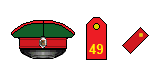 |
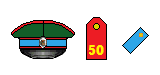 |
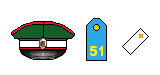 |
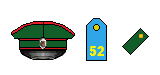 |
| 49th Brest IR | 50th Belostok IR | 51st Lithuanian IR | 52nd Vilna IR |
Dress caps were dark green, with a red band for the first regiment in the division, light blue band for the second regiment, white band for the third and dark green band for the fourth. The crown and hatbands were piped in red.
Shoulder-boards were plain red for the first two regiments and plain light blue for the second two in the division. Metal was gold. The unit's number was added in yellow. A few units had special ciphers, especially the lower numbered ones.
Greatcoat tabs were plain, in the hatband colour. Dress trousers were dark green.
All units in the RCW struggled with uniforms and equipment, but the regular infantry doubly so. If they were ever looking good, it was only because they were dressed in new British kit. Mostly they were beyond shabby.
Unit Histories
Many of the reformed infantry regiments were quite low quality. Those formed earliest and with a high component of officers, like the Simferopol' Regiment, were good, whereas those which were formed later were often made up of largely former Red Army, had far fewer officers and lacked veterans.
13th Belozersk Infantry Regiment
Revived in the AFSR on 23 March 1919 from the Drozdovskiy Regiment (the Imperial regiment of the same name had been on the Romanian front, so many of its officers would have become Drozdovtsy). Initially it had only about 76 men (presumably all officers), but by the summer it had grown to have about 100 officers, with two officer companies. The soldier ranks were filled almost entirely with former Red Army or peasant fleeing conscription in the Red Army. The regiment left Kharkiv with about 800 bayonets and 15 MGs, and by the time of the assault on Chernigov it had 2,000 bayonets, 200 sabres and 600 men in a reserve battalion.
On 1 September 1919 it went to the 9th Infantry Division, then the 4th Infantry Division.
It was heavily involved in the fighting: from Kharkiv to the Bredov March, the regiment had more than 10,000 men pass through its ranks. By autumn the losses reduced it to 215 men. It was disbanded on 6 April 1920. On arrival in the Crimea from Poland it was reduced to a battalion and merged into the 1st Markov Regiment.
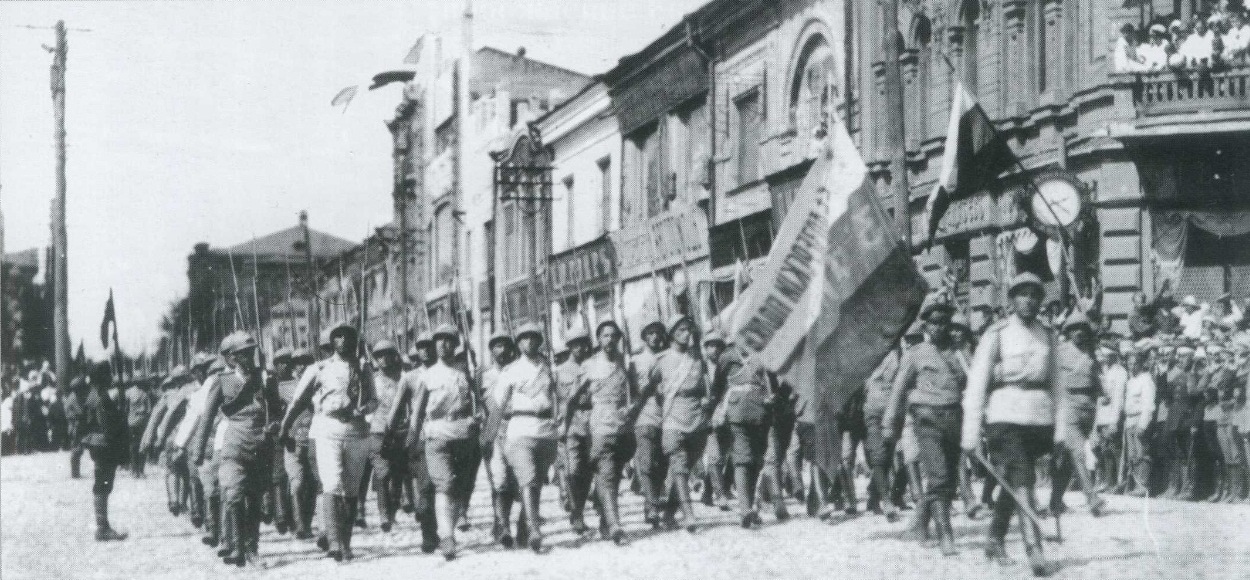
The photo from the parade in Kharkiv shows them very well presented, with Adrian helmets. Note the man to the side with a company marker on his rifle.
The unit's flag above would appear to be for its 3rd Battalion:

5th Infantry Division
Formed on 19 January in the AFSR as the 5th Division (from May the 5th Infantry Division) in the Crimea from various units formed there, as part of the Crimea-Azov Corps.
It included the Composite Guard Regiment, the Melitopol' Infantry Battalion, Berdyansk Infantry Battalion and Perekop Infantry Battalion, three artillery divizions (1st Guards, 2nd Guards, 3rd Guards Heavy), Independent Horse Mountain Battery (from the Guards Regiment) and the Reserve Cavalry Regiment. From 26 February to 22 May it added the Composite Regiment of the Guards Cuirassier Division.
On 21 May 1919 it went to the 2nd Army Corps, now including the Composite Guards Regiment, 1st Composite Regiment, the Composite Guards Artillery Brigade, the Guards Engineer Company, and a Reserve Battalion. In the summer of 1919, it included the 1st and 2nd Composite Guards Regiments, the Composite Regiment of the 19th Infantry Division, the Composite Regiment of the 20th Infantry Division, the 80th Kabardian Infantry Regiment, a reserve battalion, the Composite Guards Artillery Brigade, an independent artillery divizion (formed in July), the Independent Guards Heavy Howitzer Battery and the Guards Engineer Company. On 16 July Major General Vinogradov's detachment was included. At the end of July 1919 it was part of General Promtov's Group.
On 20 September 1919 it had 3,085 bayonets with 48 machine guns and 35 guns.
On 14 October 1919 the Composite Guards Division was separated out, leaving only the 80th Kabardian Regiment, the Composite Regiment of the 19th Infantry Division, the Composite Regiment of the 20th Infantry Division, the 5th Artillery Brigade, an engineer company, and a reserve battalion. In November the Composite Regiments each split to become brigades.
It fought in the western Ukraine, participated in the Bredov March and was interned in Poland. In July–August 1920 it was transferred to Crimea and disbanded.
The 1st Composite Infantry Regiment was formed from officer of several regiments of the Imperial Army that had been part of the Voronezh Corps (I think it may have taken the men from the Melitopol', Berdyansk and Perekop Infantry Battalions, because they disappear about this time). From 6 March to July, it was part of General Vinogradov's detachment. On 21 May 1919 it went to the 5th Infantry Division. From 26 May to 14 June it had 1,561 men. On 7 September 1919 it was divided into the Composite Regiments of the 19th and 20th Infantry Divisions as part of the same division.
The 80th Kabardian Infantry Regiment was revived in June 1919 in Belgorod around officers from that Imperial regiment who had been serving in the 1st Markov Regiment. It was part of the 1st Infantry Division, and from 27 August 1919 the 5th Infantry Division. It participated in the Bredov Campaign. Upon arrival from Poland to Crimea it was reduced to a battalion and merged with the 3rd Battalion of the 2nd Markov Regiment.
The Composite Regiment of the 19th Infantry Division was formed in the AFSR on 7 September 1919 based on the officers from that division who had been part of the 1st Composite Infantry Regiment since May 1919. It was part of the 5th Infantry Division. On 11 November 1919 it was deployed as a brigade (75th Sevastopol' and 76th Kuban Infantry Regiments) within the same division. Upon their return from Poland the men of the 75th Regiment became a battalion in the 2nd Kornilov regiment.
The banner of the 75th Sevastopol' Regiment was retained by the Kornilov Regiment, so presumably flew for either the Composite Regiment as a whole or the battalion in it representing the Sevastopol' Regiment.
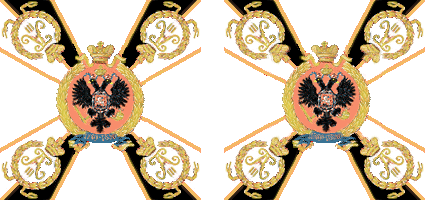
The Composite Regiment of the 20th Infantry Division was formed in the AFSR on 7 September 1919 based on the officers from that division who had been part of the 1st Composite Infantry Regiment since May 1919. It was part of the 5th Infantry Division. On 13 October it deployed as a brigade within the same division, with the 77th Tenginskaya, 78th Navaginskaya and 80th Kabardian Infantry Regiments.
The Guards units (infantry, cavalry and artillery) are discussed in their own section.
7th Infantry Division
Formed in the Armed Forces of South Russia in mid May 1919 on the basis of the Odessa Rifle Brigade as part of the 2nd Army Corps. It included the Composite Regiment of the 4th Rifle Division, the 42nd Yakut Infantry Regiment, the Composite Regiment of the 15th Infantry Division, a reserve battalion, the 7th Artillery Brigade, and the 7th Engineer Company. For a month it also had the 3rd Cavalry Regiment. In June it was transferred to Tsaritsyn and was instrumental in taking that city (General Wrangel had had insufficient infantry up to that point, so this unit's arrival was vital). During the fighting of 16–17 June it lost 29 officers and 74 soldiers killed and missing, and 59 officers and 199 soldiers wounded.
At the end of June 1919 it had 4,653 men, with 714 officers, with 442 in the ranks (excluding the artillery brigade). At the beginning of July 1919, it was returned to its corps. On 20 September 1919 it had 1,606 men with 70 machine guns and 20 guns. At that time it added the 2nd Independent Heavy Howitzer Divizion and the 6th Telegraph Company. On 2 March 1920, it was disbanded and merged into the 4th Rifle Division.
7th Infantry Division (second formation)
A completely new 7th Infantry Division was formed in the Russian Army in the Crimea. From September 1920 it was part of the 3rd Army Corps, then from the end of October 1920 the Kuban Corps. In September it included the 1st General Alekseev Partisan Infantry Regiment and the Terek Plastun Regiment in the 1st Brigade, the 1st and 2nd Kuban Rifle Regiments in the 2nd Brigade, the 7th Artillery Brigade, a reserve battalion, the Independent Kuban Engineer Company, and the Independent Zaporozh'e Kuban Cossack Divizion.
The 1st Kuban Rifle Regiment was formed on 1 March 1918 as part of the Kuban Detachment as the 1st Rifle Regiment, numbering 1,200 men and four machine guns, (including 700 officers, 400 cadets, and 100 Cossacks) and 60 machine gunners. After joining the Volunteer Army it became part of its 1st Brigade as the Kuban Rifle Regiment. From the beginning of June 1918 it was part of the 1st Infantry Division, and from January 1919 it was part of the 2nd Infantry Division. On 5 October 1919 it numbered 1,324 men and 43 machine guns. In the summer of 1920, it was part of the 1st Composite Infantry Division. From September 1920, it was part of the 2nd Brigade of the 7th Infantry Division.
13th Infantry Division
These units had been stationed in the Crimea before the war and were able to regroup from rear area elements fairly protected from the Bolsheviks. In late 1918 a Composite Regiment of the 13th Infantry Division began to form. Eventually it grew into two regiments, then all the individual regiments were able to reform as such.
The 49th Brest Infantry Regiment was in September–October 1919 part of the 1st Composite Regiment of this division, before becoming an independent regiment. On 1 August 1920 it had fallen to 96 soldiers and 6 machine guns, so on 23 August it merged with the Simferopol' Officer Regiment, forming the 2nd and 3rd battalions and an officer company. It also absorbed the 42nd Yakut Infantry Regiment.
The 50th Belostok Infantry Regiment was in September–October 1919 part of the 1st Composite Regiment of this division, before becoming an independent regiment. On 1 August 1920, it had 164 soldiers and 14 machine guns.
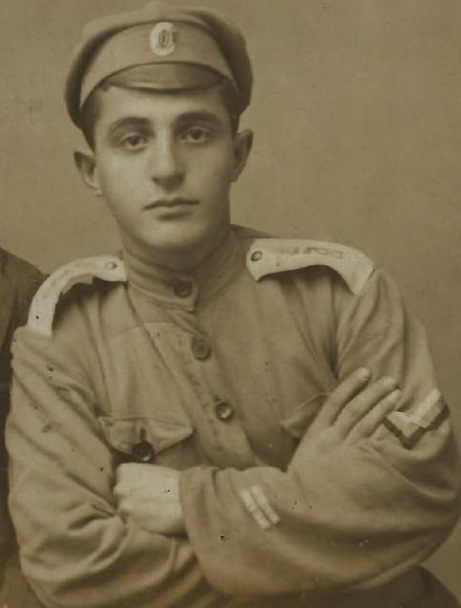
The 51st Lithuanian Infantry Regiment was in September–October 1919 part of the 2nd Composite Regiment of this division, before becoming an independent regiment. On 1 August 1920, it had 142 soldiers and 11 machine guns.
A soldier from that regiment is shown to the right. He clearly has the coloured shoulder-boards and tricolour chevron. He also has two "wound" stripes.
The 52nd Vilna (Vilnius) Infantry Regiment was in September–October 1919 part of the 2nd Composite Regiment of this division, before becoming an independent regiment. On 16 April 1920 it briefly incorporated of the remnants of the 1st and 2nd Alekseev Regiments, becoming the General Alekseev Vilna Infantry Regiment. In 1 August 1920 it had 92 soldiers and 4 machine guns.
34th Infantry Division
Details of the origins of this unit are a bit murky. Volkov gives it being was revived in the Crimea in January 1919 around officers of the Ekaterinoslav detachment, who had a lot of men originally from that division as the Composite Regiment of the 34th Infantry Division. (These units were from the Crimea, so had administration and reserve units already there, and presumably stores with uniforms etc.) He then has it splitting into the 1st and 2nd Composite Regiments of the 34th Infantry Division in Autumn 1919.
Other sources give that the officers of the Ekaterinoslav march were absorbed into the 133rd Simferopol' Officer Regiment and the Composite Crimean Regiment, who carried on as such for some time. It is possible both are true, as in practice regiments did not always go by their official names.
It seems to have largely fought in the rear of the Ukrainian front and took heavy losses against Makhno.
It grew to a division of four regiments by October 1919. It was not badly handled in the retreat and made it directly to the Crimea with many of its men, still as a division.
The 133rd Simferopol' Infantry Regiment was the first unit. It began to form in late 1918 in the Crimea as a battalion, largely officers. An account of its early days is here. On 1 October 1919 it had 1,384 men, including 258 officers (127 in the ranks) and 6 officials. At 1 August 1920 it had 34 officers and 307 soldiers with 7 machine guns.
At the start of the 20th Century it had an 1856 Model St George banner. (That flag eventually ended up with the Kornilov Regiment.)
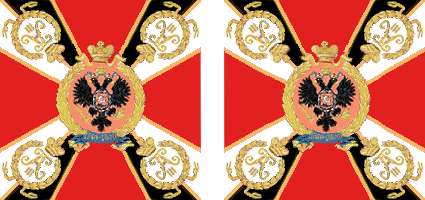
In Autumn 1919 the 134th Feodosia Infantry Regiment was part of the 1st Composite Regiment of this division. On 1 October 1919 it became an independent regiment, with 1,482 men, including 257 officers (181 in the ranks) and 7 officials. At 1 August 1920 it had 50 officers and 411 soldiers with 18 machine guns.
In Autumn 1919 the 135th Kerch-Enikale Infantry Regiment was part of the 2nd Composite Regiment of this division. On 1 October it became an independent regiment, with 1,276 men, including 159 officers (62 in the ranks) and 5 officials. At 1 August 1920 it had 46 officers and 588 soldiers with 21 machine guns.
In Autumn 1919 the 136th Taganrog Infantry Regiment was part of the 2nd Composite Regiment of this division. After the retreat it included a Guards Battalion, made up of guards officers stationed in Crimea, until they left in August to merge with the guards returning from Poland. On 1 August 1920 it had 42 officers and 797 soldiers with 36 machine guns.